
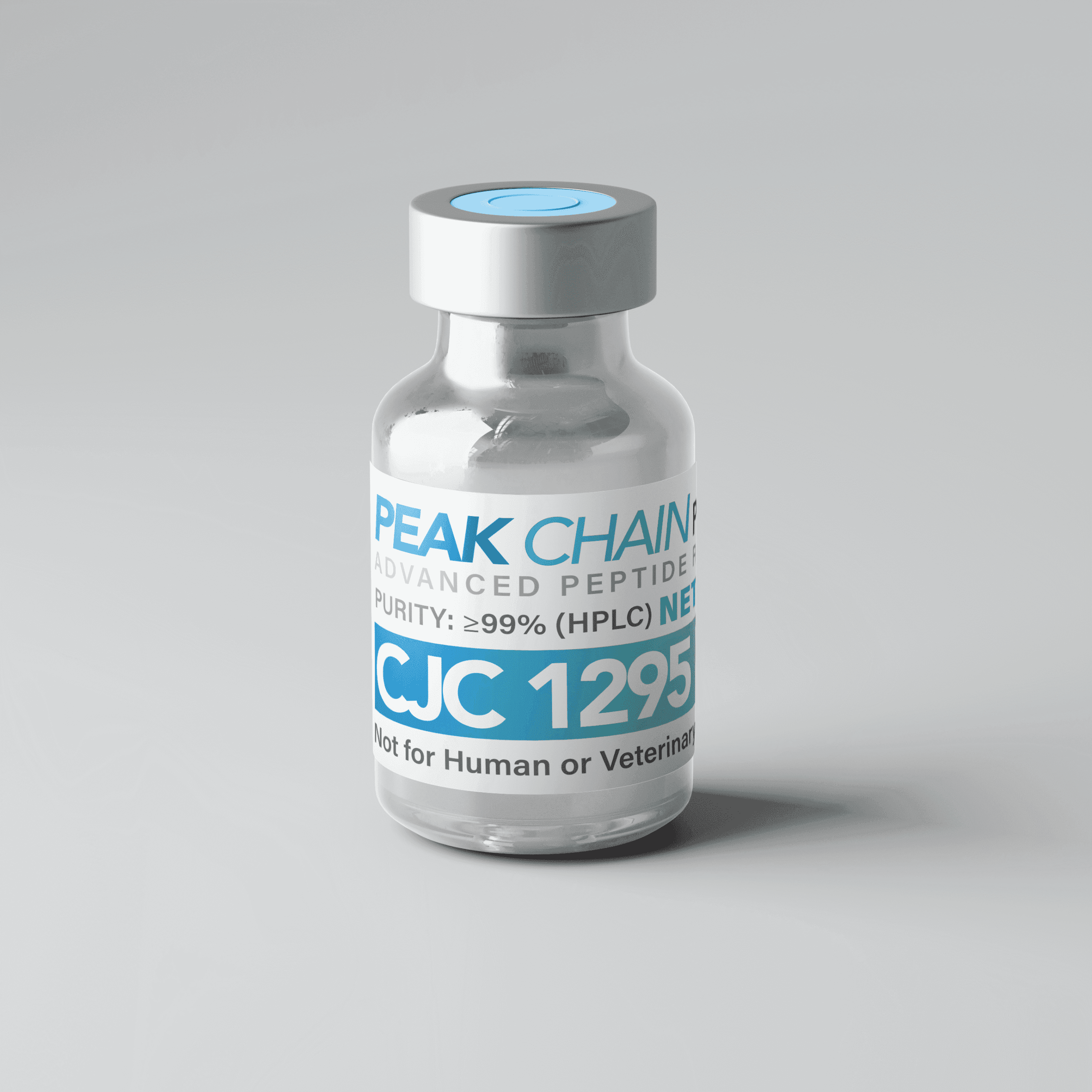
CJC-1295 No DAC
Research Overview
CJC-1295 With DAC vs CJC-1295 Without DAC Verified Feb 17
(“No DAC” commonly referred to as Modified GRF 1-29)
Research & Educational Overview
Compliance and Research Positioning
This information is provided strictly for research and educational purposes. CJC-1295 (with or without DAC) is not FDA-approved and is not intended to diagnose, treat, cure, or prevent disease. The U.S. Food and Drug Administration has identified serious adverse events associated with CJC-1295, including increased heart rate and systemic vasodilatory reactions, and has raised concerns regarding limited clinical datasets, peptide characterization, and potential immunogenicity risks in compounding contexts.
https://www.fda.gov/drugs/human-drug-compounding/certain-bulk-drug-substances-use-compounding-may-present-significant-safety-risks
https://www.fda.gov/media/183819/download
What These Peptides Are
Growth Hormone–Releasing Hormone (GHRH) is a naturally occurring peptide that stimulates the anterior pituitary gland to release growth hormone (GH). GH then influences downstream physiology, including stimulation of insulin-like growth factor-1 (IGF-1) production.
Native GHRH has a very short half-life because it is rapidly degraded in human plasma, which limits its usefulness in controlled research settings. The rapid enzymatic breakdown of GHRH has been well documented in human plasma studies.
https://pubmed.ncbi.nlm.nih.gov/3093533/
https://pmc.ncbi.nlm.nih.gov/articles/PMC423714/
Further work characterizing enzymatic cleavage pathways, including DPP-IV–related degradation, reinforces the rationale for developing modified analogs.
https://pubmed.ncbi.nlm.nih.gov/2565342/
CJC-1295 With DAC (Long-Acting Exposure Design)
CJC-1295 with DAC incorporates a Drug Affinity Complex, which has been described in published literature as enabling association with endogenous serum albumin. Albumin binding increases persistence in circulation and extends duration of biological exposure compared with native GHRH fragments.
https://pmc.ncbi.nlm.nih.gov/articles/PMC2787983/
A controlled clinical study in healthy adults demonstrated that CJC-1295 produced sustained, dose-dependent increases in GH and IGF-1, with pharmacokinetic and pharmacodynamic characterization reported in the study.
https://pubmed.ncbi.nlm.nih.gov/16352683/
https://academic.oup.com/jcem/article/91/3/799/2843281
Additional human data showed that mean and trough GH secretion increased while pulsatile GH release was preserved, which is relevant for endocrine research modeling.
https://pubmed.ncbi.nlm.nih.gov/17018654/
In research terms, the DAC modification is associated with prolonged GH axis stimulation relative to short-acting GHRH fragments.
CJC-1295 Without DAC (Modified GRF 1-29)
“CJC-1295 no DAC” is a commercial term commonly used to describe Modified GRF (1-29), a modified fragment of GHRH that does not include the albumin-binding DAC component. Without DAC, the construct is generally treated in research as a shorter-acting, pulse-oriented GHRH analog.
Human studies using the parent fragment GHRH(1-29) demonstrate stimulation of GH secretion and downstream IGF-1 physiology, including research in older men examining age-related changes in GH/IGF-1 dynamics.
https://pubmed.ncbi.nlm.nih.gov/1379256/
https://academic.oup.com/jcem/article-abstract/75/2/530/2649366
Human infusion studies evaluating modified GHRH analogs with specific substitutions (such as D-Ala²) demonstrate reduced metabolic clearance and altered disappearance kinetics, supporting the scientific rationale for stability-enhanced fragments even without DAC.
https://pubmed.ncbi.nlm.nih.gov/7962295/
https://academic.oup.com/jcem/article-abstract/79/4/1208/2653223
It is important to note that peer-reviewed human pharmacokinetic characterization of the exact commercial “no DAC” sequences marketed under various names is less extensive than the published dataset for DAC CJC-1295. For compliance, descriptions should remain anchored to documented GHRH physiology and published substitution/stability research rather than implying equivalent clinical kinetics.
https://pubmed.ncbi.nlm.nih.gov/3093533/
Mechanism of Action (Both Forms)
Both versions function as agonists of the GHRH receptor (GHRHR) located on pituitary somatotroph cells. Receptor activation promotes intracellular signaling pathways that increase synthesis and release of growth hormone.
The GHRH receptor is a G-protein–coupled receptor, and its activation involves well-characterized signaling cascades including cAMP-mediated pathways.
https://pubmed.ncbi.nlm.nih.gov/11036940/
https://pmc.ncbi.nlm.nih.gov/articles/PMC12137518/
Released GH subsequently influences peripheral tissues, including the liver, where IGF-1 production is stimulated. This downstream axis is the reason IGF-1 is commonly measured in GHRH analog research.
https://academic.oup.com/jcem/article/91/3/799/2843281
Why Exposure Profile Matters in Research
Although both forms target the same receptor, the duration of exposure differs:
- Without DAC: generally used in research as a shorter-exposure construct aligned more closely with pulsatile physiology.
- With DAC: associated with prolonged exposure and sustained GH/IGF-1 elevation in published human studies.
https://pubmed.ncbi.nlm.nih.gov/16352683/
https://pubmed.ncbi.nlm.nih.gov/17018654/
Understanding this difference allows researchers to design studies comparing pulse-like signaling vs extended stimulation of the GH axis.
Simply Put
Growth hormone is normally released in bursts. GHRH is the brain’s signal that tells the pituitary gland to release it. Natural GHRH breaks down very quickly in the bloodstream, which makes it difficult to study on its own.
-
- Modified GRF (No DAC) is a version of that signal designed to resist breakdown somewhat better than natural GHRH, while still acting for a relatively short period.
https://pubmed.ncbi.nlm.nih.gov/3093533/
-
- CJC-1295 with DAC includes a design that allows it to associate with a common blood protein (albumin), which is why published human studies show longer-lasting increases in GH and IGF-1 after administration in controlled research settings.
https://pubmed.ncbi.nlm.nih.gov/16352683/
These compounds are not approved medications and are discussed here strictly within the context of published biological and clinical research.
Additional Scientific Research Information
Teichman SL, Neale A, Lawrence B, et al. “Prolonged Stimulation of GH and IGF-1 Secretion by CJC-1295 in Healthy Adults.” Journal of Clinical Endocrinology & Metabolism, 2006.
https://pubmed.ncbi.nlm.nih.gov/16352683/
Ionescu M, Frohman LA. “Pulsatile Secretion of GH Persists during Continuous Stimulation by CJC-1295.” Journal of Clinical Endocrinology & Metabolism, 2006.
https://pubmed.ncbi.nlm.nih.gov/17018654/
Alba M, Fintini D, Sagazio A, et al. “Once-daily CJC-1295 normalizes growth in GHRH knockout mouse.” American Journal of Physiology-Endocrinology and Metabolism, 2006.
https://pubmed.ncbi.nlm.nih.gov/16822960/
Jetté L, Léger R, Thibaudeau K, et al. “Identification of CJC-1295 as a Long-Lasting GRF Analog.” Endocrinology, 2005.
https://pubmed.ncbi.nlm.nih.gov/15817669/
Sackmann-Sala L, Ding J, Frohman LA, Kopchick JJ. “GH/IGF-1 axis activation by CJC-1295 and serum protein changes.” Growth Hormone & IGF Research, 2009.
https://pubmed.ncbi.nlm.nih.gov/19386527/
Clemmons DR. “Long-Acting Forms of GHRH and GH: Effects in Normal Volunteers and Adults with GHD.” Hormone Research, 2007.
https://www.karger.com/Article/FullText/110620
Henninge J, Pepaj M, Hullstein I, Hemmersbach P. “Identification of CJC-1295 in an unknown pharmaceutical preparation.” Drug Testing and Analysis, 2010.
https://pubmed.ncbi.nlm.nih.gov/21204297/
ClinicalTrials.gov — “A Study to Evaluate CJC-1295 in HIV Patients With Visceral Obesity (NCT00267527).”
https://clinicaltrials.gov/study/NCT00267527
Compliance & Scope
This information is provided for research and educational purposes only. CJC-1295 (with or without DAC) is not an FDA-approved drug and is not intended to diagnose, treat, cure, or prevent disease. The FDA has publicly identified serious adverse events reported with CJC-1295, including increased heart rate and systemic vasodilatory reaction, and has raised concerns regarding limited clinical data, peptide impurity characterization, and potential immunogenicity risks in compounding contexts.
Research Use Notice
All compounds are intended strictly for in vitro laboratory research use only. They are not intended for human or animal consumption, and no information on this page constitutes medical advice, diagnosis, or treatment.
By proceeding to purchase, you confirm that you are a qualified researcher purchasing for legitimate scientific research purposes in accordance with our Terms of Use.
You are here
Research Library
Mechanism of action, pathway data, and published literature — education first.
Next step
Product Catalog
Pricing, availability, and ordering — for qualified researchers only.
Ready to proceed?
If you have reviewed the available research and have a defined objective, you may proceed to the Product Catalog to view pricing and place an order.
Proceed to Product CatalogFor laboratory research use only · Qualified researchers only