
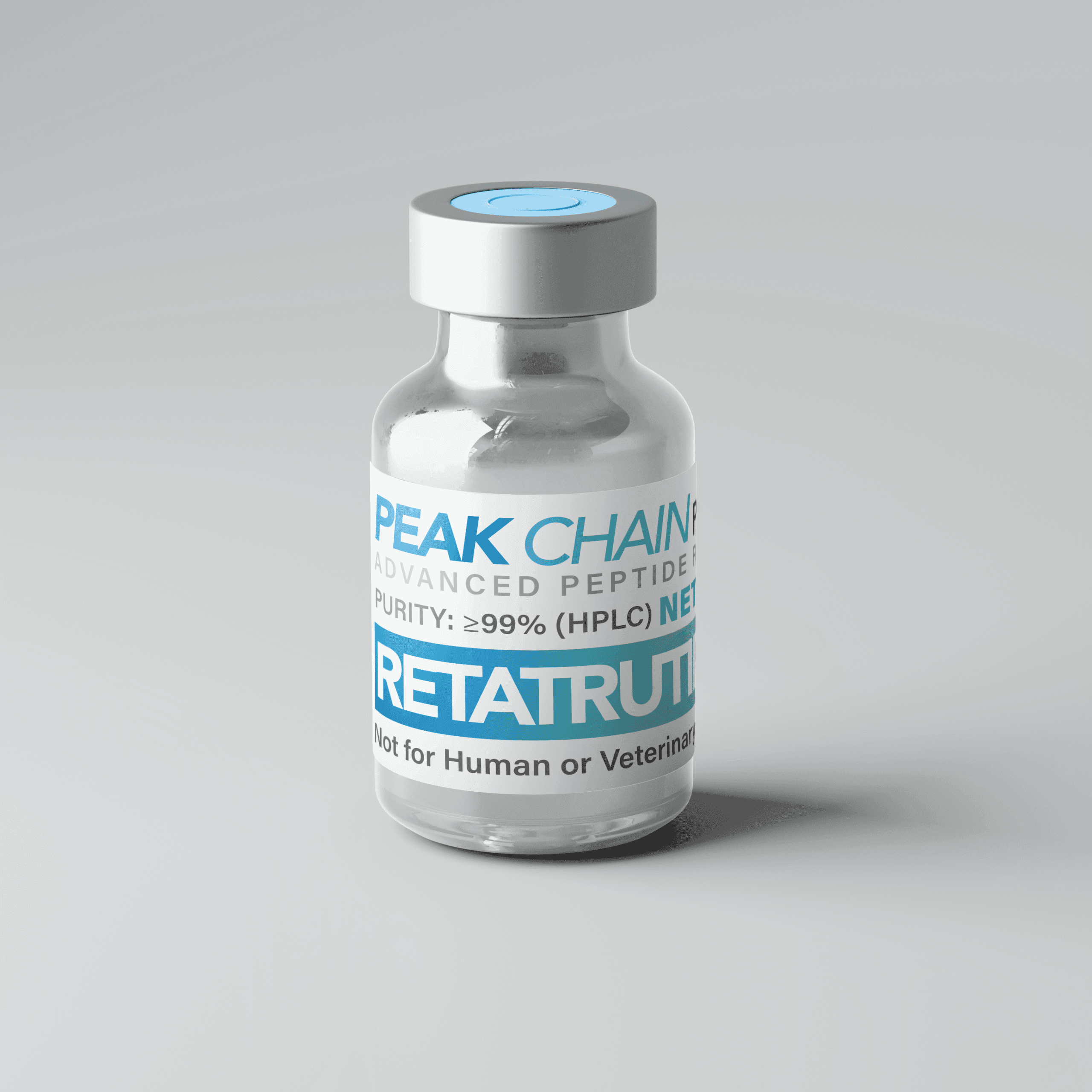
Retatrutide
Selected option price: $139.95
What Is Retatrutide?
1) Retatrutide
Retatrutide is an investigational, once-weekly injectable peptide being studied for obesity and cardiometabolic disease, designed to activate three metabolic hormone receptors: GLP-1, GIP, and glucagon (GCG). Because it engages all three pathways, it is commonly described in the scientific literature as a triple-agonist.
Verified source (obesity Phase 2, NEJM):
https://pubmed.ncbi.nlm.nih.gov/37366315/
Simply Put: It’s a research compound designed to influence hunger, blood sugar signaling, and energy use through three hormone systems at the same time.
2) Mechanism of Action (How Triple-Agonism Works)
Retatrutide is engineered to produce a coordinated metabolic effect by stimulating:
- GLP-1 receptor activity (commonly associated with appetite and glucose regulation)
- GIP receptor activity (incretin signaling that can support insulin response and metabolic control)
- Glucagon receptor activity (involved in energy balance and nutrient partitioning)
This “multi-receptor” approach is studied because it may produce larger aggregate metabolic effects than single-pathway signaling.
Verified source (Phase 2 T2D paper includes mechanistic framing + class context):
https://pubmed.ncbi.nlm.nih.gov/37385280/
Simply Put: Think of it as a “three-switch” design—each switch affects metabolism differently, and researchers study whether turning on all three together changes outcomes more than turning on only one.
3) Published Human Clinical Evidence: Obesity / Overweight (Phase 2)
A randomized Phase 2 trial in adults with obesity/overweight reported substantial, dose-dependent weight loss over 48 weeks, alongside improvements in multiple metabolic measures commonly tracked in obesity research.
Verified full-text journal link (NEJM):
https://www.nejm.org/doi/full/10.1056/NEJMoa2301972
Simply Put: In a controlled study, many participants on retatrutide lost a large amount of weight compared with placebo over about a year.
4) Published Human Clinical Evidence: Type 2 Diabetes (Phase 2) — corrected
In a Phase 2 trial in people with type 2 diabetes, retatrutide produced clinically meaningful improvements in glycemic control (e.g., HbA1c) along with robust reductions in body weight, with tolerability patterns consistent with incretin-based therapies.
✅ Correct, verified PubMed record (Rosenstock et al., 2023):
https://pubmed.ncbi.nlm.nih.gov/37385280/
Simply Put: In people with type 2 diabetes, the research showed improvements in blood sugar measures and weight — two outcomes commonly studied together in metabolic trials.
5) Cardiometabolic & Liver Signal Data — corrected
Beyond weight and glucose endpoints, retatrutide research has also examined metabolic organ outcomes, including liver fat in participants with metabolic dysfunction–associated steatotic liver disease (MASLD/NAFLD terminology varies by publication). A published substudy reported substantial liver fat reduction over the study interval evaluated.
✅ Correct, verified PubMed record (Sanyal et al., 2024):
https://pubmed.ncbi.nlm.nih.gov/38858523/
Simply Put: Some studies looked beyond the scale—at things like fat stored in the liver, which is a common metabolic research target.
6) Safety & Tolerability (Research Context)
Across published analyses, the most common adverse events reported with retatrutide have been gastrointestinal (such as nausea, vomiting, diarrhea, constipation). These are frequently discussed in the context of incretin-pathway agents, and researchers continue to evaluate longer-term safety in larger Phase 3 programs.
Verified source (meta-analysis; safety/tolerability patterns + metabolic marker changes):
https://pubmed.ncbi.nlm.nih.gov/39318607/
Simply Put: The most common side effects seen in studies are stomach-related. Larger studies help clarify how often these occur and how they compare across doses.
7) Ongoing Phase 3 Program — corrected
Retatrutide remains investigational and is being evaluated in multiple Phase 3 trials, including large studies designed to better define long-term outcomes in specific cardiometabolic populations.
✅ Verified Phase 3 registry (example):
https://clinicaltrials.gov/study/NCT06383390
Simply Put: Phase 3 trials are the “big studies” that involve more people and longer timelines to understand real-world-scale outcomes and safety.
8) Potential Research Value (Non-Clinical, Education-Forward)
From a research perspective, retatrutide is of interest because it enables investigation of:
- Multi-pathway appetite and energy regulation (triple receptor engagement)
- Comparative response vs single-pathway incretin approaches
- Body composition and metabolic marker tracking in structured clinical settings
Verified source (body composition focus in adults with T2D, 2025):
https://pubmed.ncbi.nlm.nih.gov/40609566/
Simply Put: Researchers aren’t only studying weight—often they want to understand what kind of weight changes occur (fat mass vs lean mass) and how metabolic markers move alongside those changes.
9) Research Use & Compliance Statement
Retatrutide is an investigational compound and is not approved for the diagnosis, treatment, cure, or prevention of any disease. Any discussion here is provided for scientific and educational purposes only, summarizing information from peer-reviewed publications and official trial registries. No dosing, administration, or use instructions are provided.
Verified source (FDA “Drug Development” overview—regulatory context):/
https://www.fda.gov/patients/drug-development-process/step-3-clinical-research
Simply Put: This page is meant to help researchers understand what’s been published and what’s being studied—not to provide medical guidance or directions for use.
No additional information available.