
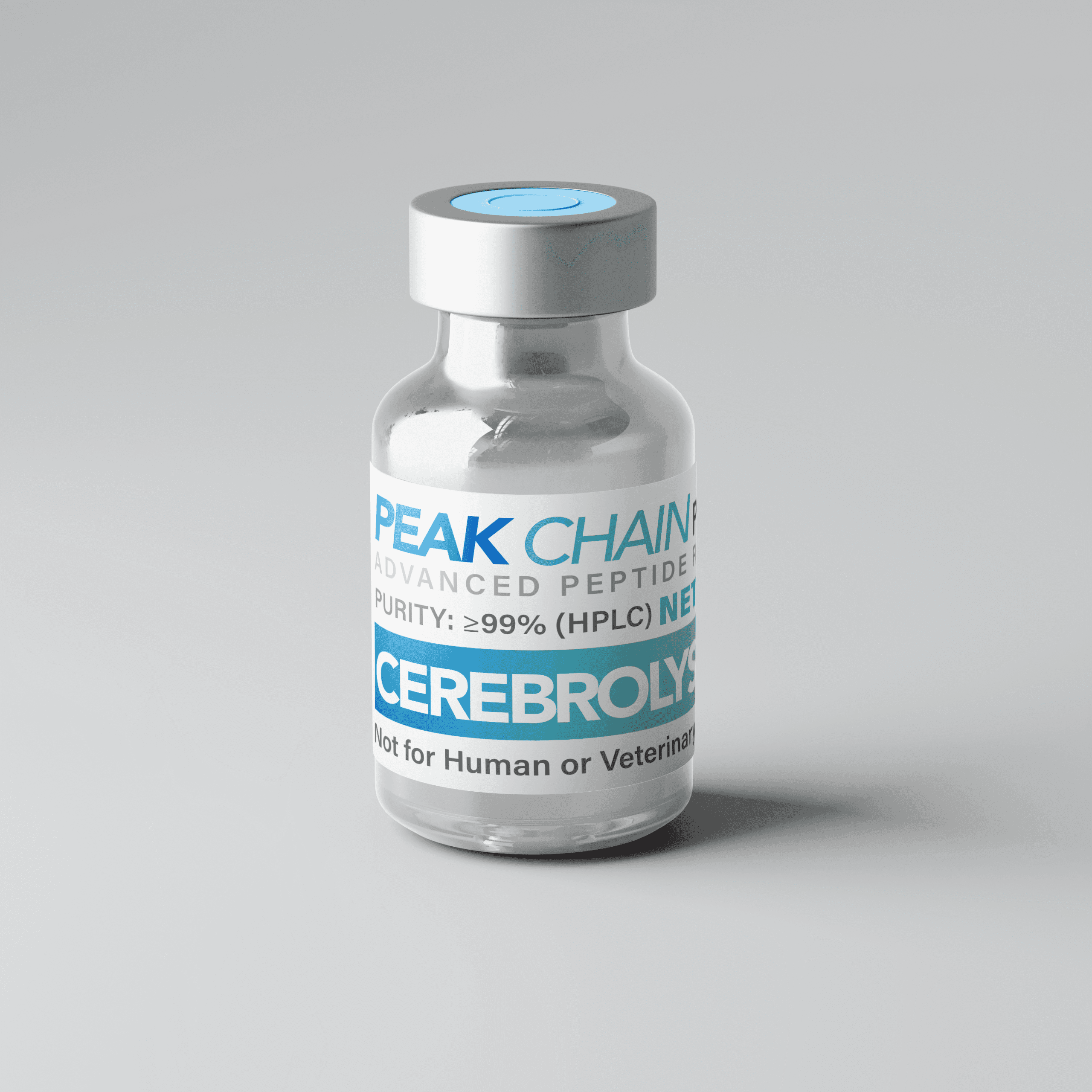
Cerebrolysin
SKU: CBL60-PC
What Is Cerebrolysin?
Cerebrolysin is a parenteral peptide preparation composed of low–molecular-weight biologically
active peptides and free amino acids derived through enzymatic breakdown of porcine brain proteins. It is widely described in the clinical literature as having neurotrophic factor–like properties, meaning it may mimic or support signaling that overlaps with endogenous brain growth and survival pathways.
https://pubmed.ncbi.nlm.nih.gov/19848437/
Mechanisms of Action
Cerebrolysin is generally discussed as a multi-pathway neurobiologic intervention rather than a single-target compound. Proposed mechanisms in the literature commonly include support of neuronal survival signaling, reduction of injury-associated cellular stress responses, and promotion of neuroplastic remodeling relevant to recovery paradigms.
Mechanistic and clinical synthesis review (includes neurotrophic/repair framing):
https://pubmed.ncbi.nlm.nih.gov/22013558/
Human Clinical Evidence (Published)
Acute Ischemic Stroke (Recovery and Rehabilitation Outcomes)
Cerebrolysin has been studied in randomized trials as an adjunct to standard stroke care and early rehabilitation, with publications describing improvements in functional and global outcomes in early recovery windows, while also emphasizing that results depend on trial design, endpoints, and study populations.
Randomized placebo-controlled multicenter stroke trial publication (CARS):
https://pubmed.ncbi.nlm.nih.gov/26564102/
Systematic review/meta-analysis of stroke motor recovery trials (CARS-1/CARS-2):
https://pmc.ncbi.nlm.nih.gov/articles/PMC5605586/
More recent pooled trial analysis evaluating efficacy and safety in acute ischemic stroke populations:
https://pubmed.ncbi.nlm.nih.gov/41018475/
Traumatic Brain Injury (TBI)
Cerebrolysin has been investigated in moderate-to-severe TBI, including within the CAPTAIN trial program. Meta-analytic work has reported signals across neurological and functional outcome measures, though interpretation remains dependent on study heterogeneity and endpoint selection.
Prospective meta-analysis of the CAPTAIN trial series:
https://pubmed.ncbi.nlm.nih.gov/33620612/
Systematic review of Cerebrolysin in TBI populations:
https://pmc.ncbi.nlm.nih.gov/articles/PMC10046100/
Alzheimer’s Disease (Mild-to-Moderate)
Clinical trials and pooled analyses in mild-to-moderate Alzheimer’s disease have evaluated cognitive and global function endpoints. Meta-analytic findings suggest measurable symptomatic benefit in certain study sets, with effect size and durability dependent on trial structure and follow-up.
Meta-analysis of randomized controlled clinical trials in mild-to-moderate Alzheimer’s disease:
https://pubmed.ncbi.nlm.nih.gov/25832905/
Vascular Dementia
Cerebrolysin has also been evaluated in vascular dementia. High-level evidence syntheses typically describe possible positive effects on cognition/global function but stress that the overall evidence base is constrained by limited trial numbers, variability in treatment duration, and short follow-up in many included studies.
Cochrane Review (vascular dementia):
https://www.cochrane.org/CD008900/DEMENTIA_cerebrolysin-vascular-dementia
Clinical review of vascular dementia trial evidence:
https://pubmed.ncbi.nlm.nih.gov/23440834/
Safety Profile (Clinical Context)
Across multiple randomized programs and pooled analyses in neurologic populations (notably stroke), Cerebrolysin has frequently been described as generally well tolerated, with safety outcomes often reported as comparable to placebo within the analyzed datasets. Safety interpretation should remain anchored to the studied populations, endpoints, and reporting standards.
Stroke pooled safety/efficacy meta-analysis (includes safety outcomes):
https://pmc.ncbi.nlm.nih.gov/articles/PMC5605586/
Potential Researcher Benefits (Why It’s Studied)
Cerebrolysin is commonly studied as a tool for systems-level neurorecovery research, particularly when investigators want to explore:
- Neurotrophic-like signaling and neuronal survival pathway readouts
- Neuroplasticity and functional recovery endpoints following CNS insult
- Translational outcome modeling (global/functional scales paired with mechanistic biomarkers)
- Comparative analyses versus standard symptomatic cognitive agents or rehab-only approaches
Historical meta-analysis of randomized trials in Alzheimer’s disease (trial-aggregation perspective):
https://pubmed.ncbi.nlm.nih.gov/17318304/
Simply Put
Cerebrolysin is a mixture of very small protein fragments that scientists study because they may behave somewhat like the brain’s natural repair and support signals. In published clinical research, it has been explored for recovery after stroke or brain injury and for memory and cognitive conditions, with results that can vary depending on the condition studied and how the trial measured improvement.
Research Compliance Statement
This material is provided strictly for educational and scientific discussion purposes.
Not intended to diagnose, treat, cure, or prevent any disease.
For research use only.
| SKU | CBL60-PC |
|---|